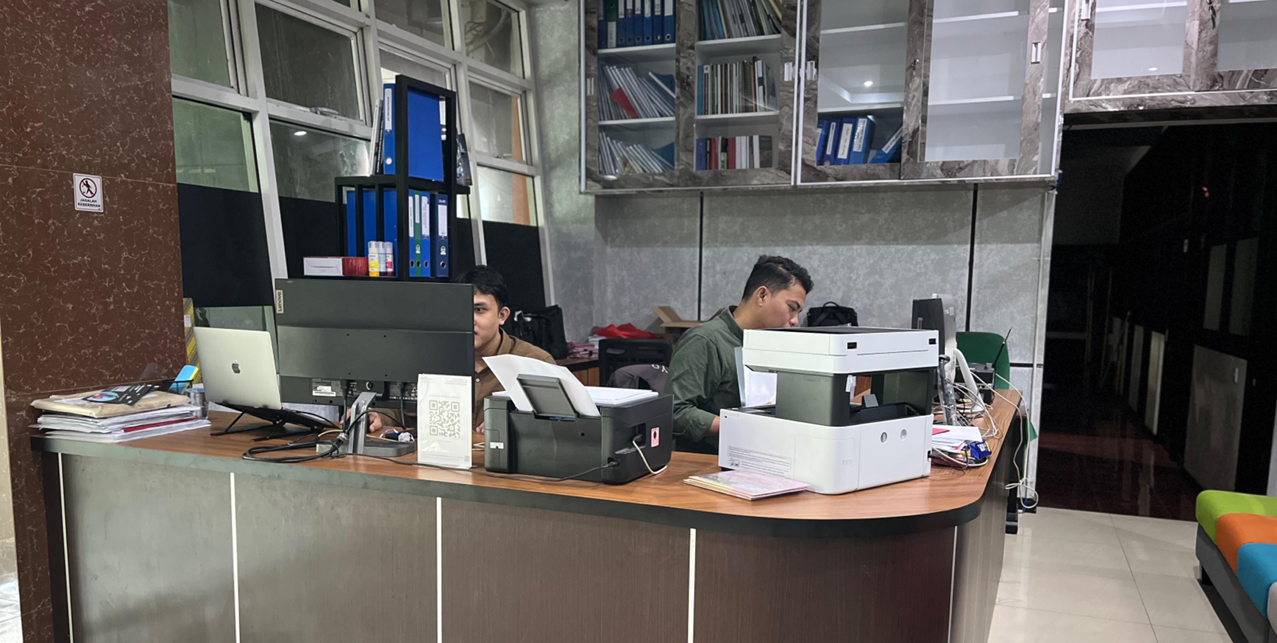
Study Program Academic Atmosphere
The Industrial Engineering Study Program, Faculty of Industrial Technology, Indonesian Muslim University (FTI-UMI) offers an academic atmosphere that is dynamic, collaborative, and oriented towards developing competencies in the field of industrial engineering. With a curriculum designed to combine theory and practice, students are encouraged to master concepts such as operations management, production systems, ergonomics and logistics, while applying them through real-world case studies and industry-based projects. The learning process is supported by lecturers who are not only experienced in the academic field, but are also active in research and collaboration with the industrial world, so that lecture material is always relevant to the latest developments.
Academic activities in the FTI-UMI Industrial Engineering Study Program are not limited to the classroom, but also involve practicums in advanced laboratories, industrial visits, as well as seminars and workshops with speakers from professional circles. Students are also given the opportunity to participate in national and international competencies, such as Robotics Contests or Production System Design Competitions, which not only hone technical skills but also critical thinking and teamwork abilities. An inclusive and supportive campus atmosphere is created through various student activities, such as the Departmental Student Association (HMJ) and special activity units, which facilitate the development of soft skills and professional networks.
With complete facilities, such as a digital library, co-working space, and industrial simulation laboratory, the FTI-UMI Industrial Engineering Study Program creates an inspiring learning environment and is ready to produce graduates who are competent, adaptive, and ready to compete in the world of work. A collaborative and solution-oriented academic atmosphere makes this study program an ideal choice for prospective industrial engineers who want to contribute to facing global challenges in the era of the industrial revolution 4.0.